
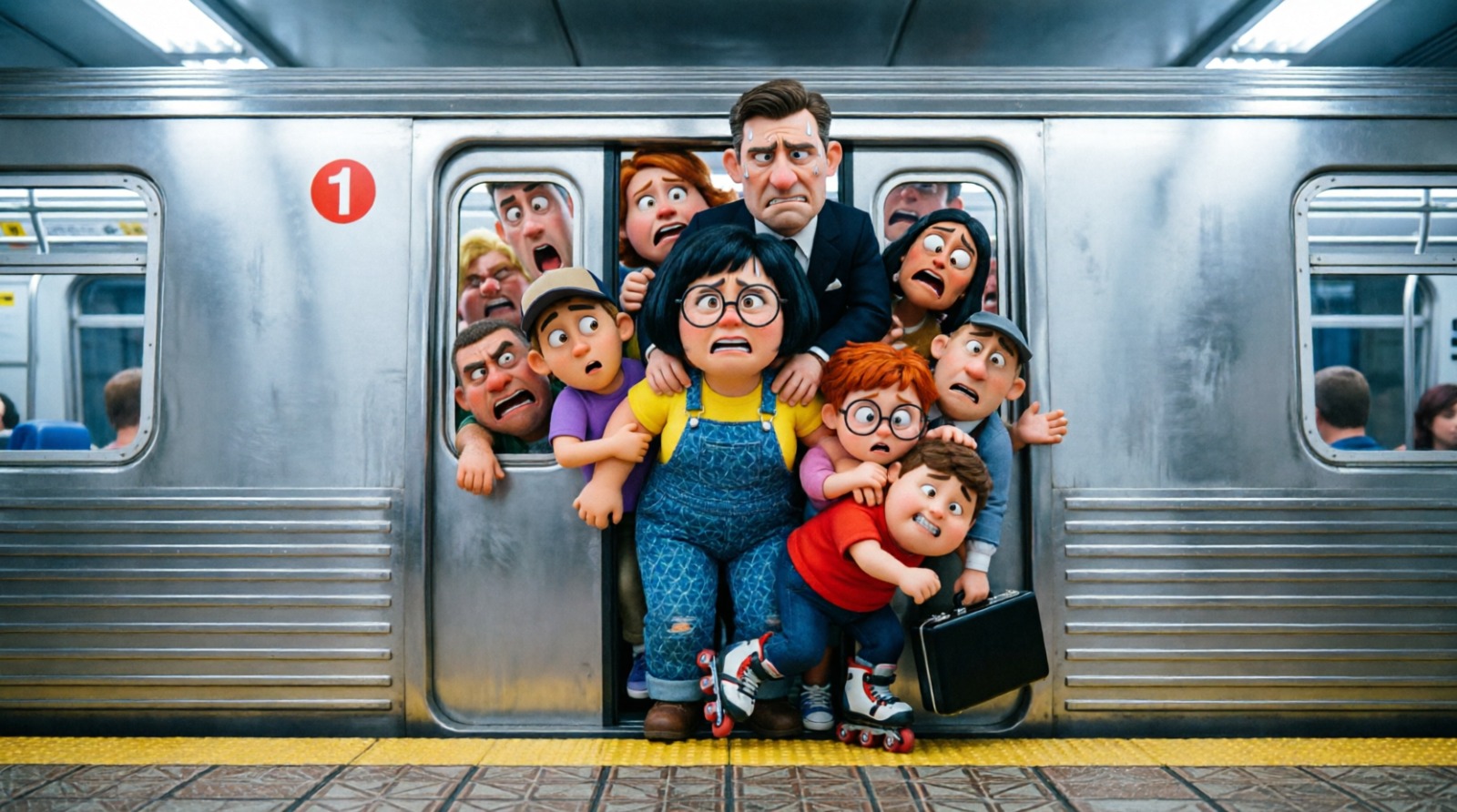
Create a 10-second, 9:16 vertical Pixar-style 3D animated comedy video of an extremely overcrowded subway train. Scene Setup: Underground… — a ready-to-use prompt for detailed AI video generation.
AI Video Prompt
Create a 10-second, 9:16 vertical Pixar-style 3D animated comedy video of an extremely overcrowded subway train. Scene Setup: Underground subway station platform with geometric tiled floor (gray, white, brown pattern), yellow safety line at platform edge, overhead fluorescent tube lighting, dark ceiling with visible infrastructure. Silver/metallic modern subway train car with sliding double doors featuring rounded rectangular windows, red circle indicator with white number "1" visible on train exterior. Characters: Diverse crowd of 15+ characters impossibly packed into train doorway including: Central woman with dark bob hair, round glasses, yellow shirt, blue patterned overalls, pink shoes (loses glasses at 6s) Tall man in dark business suit with tie, brown receding hair, stressed expression (upper left) Child with tan cap, purple shirt, blonde hair, wide eyes (upper right) Red-haired child with glasses, freckles, green clothing (middle right) Person in red shirt with orange roller skates and briefcase at bottom Bald man with mustache Person with red glasses Various other compressed faces and limbs All characters showing exaggerated expressions of discomfort, panic, and being squished. Action Sequence: 0.0s-2.0s: Static medium shot from platform. Train doors wide open revealing absurdly overcrowded interior. Dozens of diverse characters packed impossibly tight in doorway - arms raised, limbs at odd angles, faces showing discomfort and resignation. Woman in center wearing glasses. 2.0s-4.0s: Automatic doors begin closing slowly from both sides. Crowd compresses further, bodies shift and contort. Expressions shift to increased panic and distress. Eyes widen, mouths open. Bodies squeeze together in cartoon-exaggerated compression. 4.0s-6.0s: Doors continue closing, extreme compression. Faces press against door surfaces, limbs stick out at various angles. Maximum squash-and-stretch animation. Woman's glasses fall off and drop to platform floor at 6.0s mark. 6.0s-7.0s: Doors fully close with passengers still visibly compressed inside, faces and limbs visible through door windows. Green eyeglasses now lying alone on platform tiles in foreground. 7.0s-8.0s: Train begins to depart, moving away from platform. Passengers blurred through moving windows. Green glasses remain centered on platform floor as punchline. 8.0s-10.0s: Train continues departing, nearly out of frame. Empty platform space revealed. Green glasses alone on tiled floor. Train completely exits frame leaving empty platform with abandoned glasses. Animation Style: Pixar/Disney-quality 3D character animation Exaggerated facial expressions and squash-and-stretch physics Cartoon compression beyond realistic limits Highly expressive character designs Distinct, recognizable individual characters Professional animation quality Camera Work: Completely static medium shot Eye-level platform perspective (5-6 feet high) Straight-on view of train doors No camera movement, panning, or zooming Locked-off tripod shot Deep depth of field - everything in sharp focus Standard to slightly wide-angle lens Lighting: Overhead fluorescent tube lighting (4000-5000K) Even, institutional subway station illumination Slightly cool color temperature Soft shadows Metallic reflections on train surface Interior train lighting visible through windows Audio: Presumed subway ambience with door closing sounds at 2s, door closure completion at 6s, glasses hitting floor at 6s, train departure sounds 7s-10s. No dialogue. Physics: Cartoon/exaggerated physics for comedic effect Bodies compress beyond realistic limits Smooth automatic door closing speed Realistic gravity for falling glasses Smooth train acceleration on departure Squash-and-stretch animation principles

Social Plugin